

Introduction
Businesses today are under constant pressure to improve efficiency, reduce operational costs, and deliver faster customer experiences. As companies grow, managing repetitive tasks manually becomes difficult and time consuming. This is where business process automation plays a critical role. Organizations across industries are now investing in smarter technologies that simplify operations and improve productivity.
One of the leading enterprise automation solutions available today is IBM Cloud Pak for Business Automation. It helps businesses automate workflows, manage documents, streamline approvals, and improve decision making through AI powered automation. From financial institutions to healthcare providers, companies are using workflow automation tools to modernize outdated systems and support digital transformation initiatives.
Modern enterprises also face several digital transformation challenges, including disconnected systems, rising customer expectations, data security concerns, and increasing operational complexity. Traditional methods often slow down productivity and create bottlenecks that impact overall business performance.
Cloud Pak for Business Automation addresses these challenges by combining intelligent automation, robotic process automation, content management, and low code development into a single business automation platform. Its flexible and cloud native approach allows organizations to adapt quickly while maintaining security, compliance, and operational efficiency.
In today’s competitive environment, companies need more than basic automation tools. They need scalable enterprise workflow solutions that can integrate with existing infrastructure and support long term growth. That is why many enterprises are turning toward advanced process automation software to stay competitive and future ready.
What Is Cloud Pak for Business Automation
Cloud Pak for Business Automation is an integrated enterprise software platform designed to help organizations automate business processes, manage workflows, and improve decision making using intelligent automation technologies.
It combines multiple automation capabilities into a unified system, including workflow management, robotic process automation, document processing, and AI powered automation tools. This allows businesses to streamline operations and reduce dependency on manual tasks.
The main purpose of this platform is to help enterprises modernize their operations while improving efficiency, accuracy, and scalability. Instead of using separate tools for different automation needs, businesses can use one centralized platform to manage everything.
It is part of a broader ecosystem focused on hybrid cloud and enterprise modernization, allowing companies to deploy automation solutions in different environments based on their needs.
Automation is important today because organizations deal with large volumes of data, complex workflows, and increasing customer expectations. Manual processes slow down operations and increase the risk of errors. Intelligent automation helps solve these problems by improving speed, consistency, and decision making.
Key areas supported by this platform include intelligent workflows, business rules automation, content management, AI driven document processing, and enterprise level operational optimization.
Key Features of Cloud Pak for Business Automation
AI Driven Workflow Automation
AI driven workflow automation helps organizations streamline business processes by reducing manual intervention and improving decision making. It enables tasks to move automatically through different stages based on predefined rules and intelligent insights.
Businesses can use this capability to automate approvals, prioritize tasks, and eliminate delays caused by manual processing. For example, financial institutions can automate loan approval workflows, reducing processing time and improving customer satisfaction.
This feature improves operational speed, reduces errors, and ensures consistency across workflows.
Key benefits include faster approvals, better process visibility, improved efficiency, and reduced operational delays.
Document Processing and Content Management
Managing large volumes of documents manually can be time consuming and prone to errors. Cloud Pak for Business Automation simplifies this by offering intelligent document processing and structured content management.
It can automatically extract data from invoices, contracts, forms, and other business documents. This reduces manual data entry and improves accuracy.
The system also helps organizations store, organize, and retrieve documents efficiently while maintaining compliance and security standards.
Industries such as healthcare, banking, and insurance benefit significantly from automated document processing as it reduces administrative workload and improves data accuracy.
Core capabilities include automated data extraction, digital document storage, secure access control, and compliance management.
Robotic Process Automation
Robotic process automation focuses on handling repetitive and rule based tasks that do not require human judgment. Software bots can perform these tasks faster and with higher accuracy than manual processes.
Common use cases include data entry, invoice processing, customer onboarding, report generation, and system updates.
By automating these tasks, organizations can reduce workload on employees and allow them to focus on more strategic activities.
This leads to improved productivity, reduced operational costs, and better resource utilization.
Low Code Automation Tools
Low code automation tools allow businesses to create applications and workflows without requiring advanced programming skills. This makes automation more accessible to non technical users within an organization.
Business teams can design workflows using visual interfaces, reducing dependency on IT departments and speeding up development cycles.
This approach supports faster implementation of automation solutions and allows businesses to respond quickly to changing requirements.
Key benefits include faster deployment, reduced development costs, improved flexibility, and better collaboration between teams.
Business Rules and Decision Management
Business rules and decision management help organizations automate policies, approvals, and operational decisions in a structured way.
Instead of manually evaluating every case, businesses can define rules that automatically guide decisions based on conditions and logic.
This improves consistency, reduces human error, and ensures compliance with internal and external regulations.
Common use cases include financial approvals, compliance checks, risk assessment, and operational decision making.
It helps organizations maintain better control over business processes while improving efficiency and transparency.
Benefits of Using Cloud Pak for Business Automation
Cloud Pak for Business Automation helps organizations transform the way they operate by combining intelligence, automation, and scalability into one platform. Instead of relying on manual processes or disconnected tools, businesses can manage end to end workflows more efficiently.
Improved Productivity
One of the most immediate benefits is improved productivity. Employees no longer need to spend time on repetitive tasks such as data entry, document sorting, or manual approvals. Automation handles these processes, allowing teams to focus on strategic work that adds real value to the business.
For example, in a corporate finance department, invoice processing that once took days can now be completed in hours or even minutes.
Faster Decision Making
With intelligent automation and real time data processing, organizations can make faster and more informed decisions. The system reduces delays caused by manual approvals and ensures that critical workflows move smoothly without interruptions.
This helps leadership teams respond quickly to market changes and operational challenges.
Better Customer Experience
Customers expect fast, accurate, and seamless services. Automation improves response times, reduces errors, and ensures consistent service delivery across all touchpoints.
For example, automated customer onboarding processes in banking or insurance significantly reduce waiting time and improve satisfaction.
Reduced Operational Costs
By reducing manual workload and improving efficiency, businesses can significantly cut operational costs. Automation reduces dependency on large manual teams for repetitive work and minimizes errors that could lead to financial losses.
Enhanced Compliance and Security
Cloud Pak for Business Automation supports structured workflows that follow defined business rules and compliance requirements. This ensures that organizations meet regulatory standards while maintaining data security.
It reduces risks associated with human error and inconsistent processes.
Scalable Enterprise Automation
As businesses grow, their processes become more complex. This platform is designed to scale easily, allowing organizations to expand automation across departments without rebuilding systems from scratch.
This makes it suitable for both mid sized enterprises and large global organizations.
How Cloud Pak for Business Automation Works
Cloud Pak for Business Automation works by integrating multiple automation technologies into a unified system that manages workflows, data, and decisions across an organization.
Integration with Existing Systems
The platform is designed to connect with existing business applications and databases. This allows organizations to automate processes without replacing their entire IT infrastructure.
It works across legacy systems, cloud environments, and modern applications.
Hybrid Cloud Environment
One of its key strengths is support for hybrid cloud environments. Businesses can run automation workloads on private clouds, public clouds, or a combination of both depending on security, performance, and compliance needs.
Role of AI and Machine Learning
Artificial intelligence plays a central role in improving automation accuracy and decision making. The system can analyze data, identify patterns, and make intelligent decisions within workflows.
Machine learning helps the platform improve over time by learning from past processes and outcomes.
Workflow Orchestration
Workflow orchestration ensures that different tasks within a business process are coordinated properly. It manages the sequence of operations, assigns tasks automatically, and ensures that processes flow smoothly from start to finish.
This eliminates bottlenecks and improves operational efficiency.
Top Use Cases Across Industries
Cloud Pak for Business Automation is widely used across industries because of its flexibility and scalability. It adapts to different business needs and helps organizations improve efficiency in various areas.
Banking and Financial Services
Banks use automation to streamline loan processing, customer onboarding, fraud detection, and compliance reporting. It helps reduce processing time and improves accuracy in financial operations.
Healthcare Automation
Healthcare organizations use automation for patient record management, appointment scheduling, insurance processing, and data handling. This improves efficiency and reduces administrative burden on medical staff.
Insurance Claims Processing
Insurance companies benefit from faster claims verification, automated documentation, and reduced fraud risks. This leads to quicker claim settlements and better customer satisfaction.
Human Resources Automation
HR departments use automation for recruitment, employee onboarding, payroll processing, and performance tracking. It simplifies administrative tasks and improves workforce management.
Supply Chain and Operations
In supply chain management, automation helps track inventory, manage logistics, and optimize delivery processes. It improves visibility and reduces operational delays.
Cloud Pak for Business Automation vs Traditional Automation Tools
| Feature | Cloud Pak for Business Automation | Traditional Automation Tools |
|---|---|---|
| Scalability | Highly scalable across enterprise systems | Limited scalability |
| AI Capabilities | Advanced AI and machine learning support | Minimal or no AI integration |
| Flexibility | Works across hybrid cloud environments | Mostly on-premise or single environment |
| Integration | Connects with multiple systems and applications | Limited integration capabilities |
| Security | Enterprise grade security and compliance | Basic security features |
| Cost Efficiency | Optimized long term operational cost | Higher maintenance cost over time |
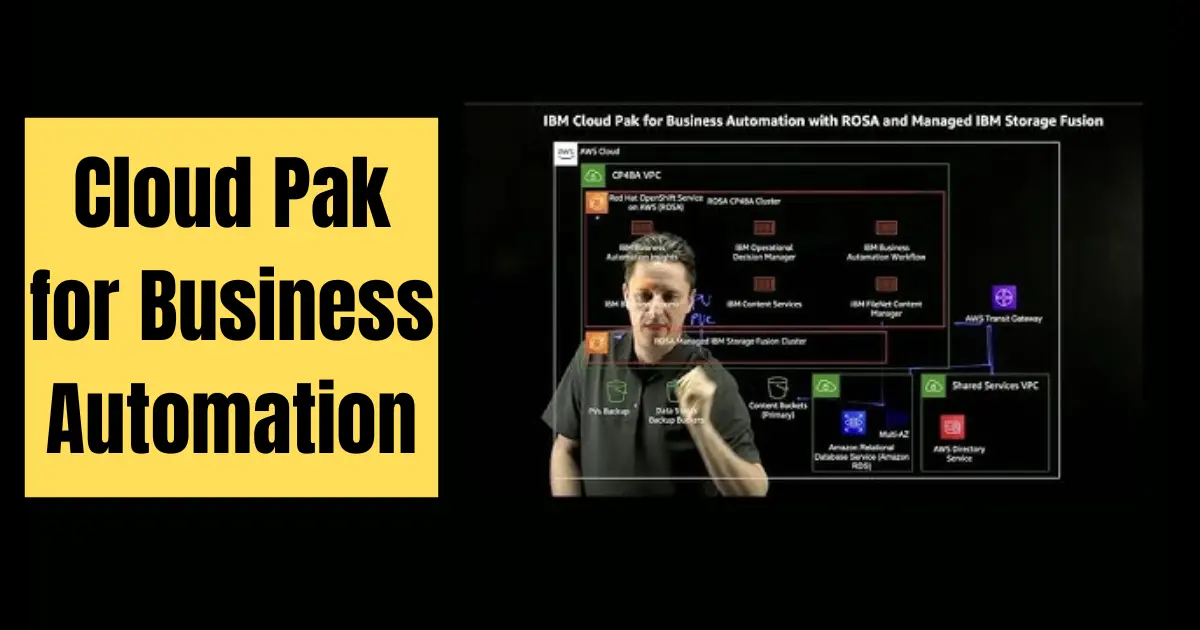
Cloud Pak for Business Automation Architecture Overview
The architecture of Cloud Pak for Business Automation is designed to support scalability, flexibility, and security while enabling intelligent workflow execution.
Core Components
It includes modules for workflow automation, document processing, business rules management, and robotic process automation.
Integration Layers
These layers allow the platform to connect with enterprise applications, data sources, and third party systems seamlessly.
Containers and Kubernetes
The system is built using containerized architecture, which allows it to run consistently across different environments and ensures high availability.
Security Framework
Security is embedded at every level, including data encryption, access control, and compliance monitoring.
Cloud Native Approach
The platform is designed as cloud native, meaning it can scale dynamically based on workload demand and business requirements.
Best Practices for Successful Implementation
Implementing Cloud Pak for Business Automation successfully requires a clear strategy rather than a purely technical rollout. Organizations that plan properly tend to see faster adoption and better long term results.
Define Automation Goals
Before starting, businesses should clearly define what they want to achieve with automation. This could include reducing processing time, improving accuracy, or lowering operational costs. Clear goals help in designing better workflows and measuring success.
Start with High Impact Processes
Instead of automating everything at once, it is better to begin with high impact and repetitive processes. These are usually areas where automation can quickly show measurable improvements, such as invoice processing or customer onboarding.
Ensure Data Security
Since automation involves sensitive business data, strong security measures must be in place. Organizations should ensure proper access controls, encryption, and compliance with industry regulations.
Train Employees Properly
Successful adoption depends on how well employees understand the system. Proper training ensures teams can use automation tools effectively and adapt to new workflows without resistance.
Monitor and Optimize Continuously
Automation is not a one time setup. Businesses should continuously monitor performance, identify bottlenecks, and optimize workflows to achieve better efficiency over time.
Common Challenges and Solutions
While Cloud Pak for Business Automation offers powerful capabilities, organizations may face certain challenges during implementation. Understanding these challenges helps in preparing better solutions.
Integration Complexity
Many enterprises use multiple legacy systems, which can make integration complex. The solution is to use phased integration and prioritize critical systems first to ensure smoother adoption.
Employee Adoption
Employees may resist change due to unfamiliar workflows. This can be addressed through proper training, clear communication, and demonstrating the benefits of automation in daily tasks.
Legacy Systems
Older systems may not support modern automation tools easily. In such cases, hybrid integration approaches help bridge the gap between old and new technologies.
Data Management
Handling large volumes of data can be challenging. Implementing proper data governance policies ensures data remains accurate, secure, and well organized.
Scalability Concerns
As automation expands, systems must handle increased workloads. Cloud native architecture helps address scalability by allowing resources to adjust dynamically based on demand.
Conclusion
Cloud Pak for Business Automation represents a major step forward in how modern enterprises manage and optimize their operations. By combining workflow automation, AI powered automation, document processing, and intelligent decision making, it helps organizations reduce manual effort and improve efficiency across all levels.
As businesses continue to face increasing complexity and digital transformation challenges, automation becomes essential rather than optional. Solutions like this enable organizations to stay competitive, agile, and future ready.
The shift toward intelligent automation is not just a technology upgrade but a strategic move toward building more efficient, scalable, and resilient enterprises.
